


Choosing between LTL and FTL shipping affects your freight costs, delivery timelines, and product handling. The right choice depends on:
- Shipment size and weight
- Delivery urgency
- Product value or sensitivity
- Budget and transportation costs
- How much handling your freight can tolerate
LTL shipping is often best for smaller freight loads that do not need a full trailer. FTL shipping is better for larger, time-sensitive, or higher-value shipments that need a dedicated truck and fewer handling points.
This guide breaks down the key differences so you can choose the freight option that best supports your business.
Quick Answer
For most smaller, routine shipments, Less-Than-Truckload (LTL) is the more cost-effective choice because you share trailer space with other shippers.
For larger, urgent, fragile, or high-value shipments, FTL is usually the better choice because your freight moves on a dedicated truck with fewer handling points.
For mid-sized shipments that do not quite need a full trailer, a partial truckload may be worth comparing before you decide.

Understanding the Fundamentals: What is LTL Shipping?
LTL shipping consolidates smaller freight from multiple shippers into a single truck. Think of it as a carpool for your cargo. Instead of paying for an entire truck you don’t need, you only pay for the portion of the trailer your goods occupy, making it a highly cost-effective solution for growing businesses.
The LTL process operates on a hub-and-spoke model. A local truck picks up your freight and takes it to a regional terminal. There, it’s sorted and consolidated with other shipments heading in the same general direction. This process may repeat at several hubs before a final truck handles the delivery, a key factor that influences transit times and handling.
Key Characteristics of Less-Than-Truckload (LTL) Freight
A few core attributes define LTL shipments. Understanding these helps you determine if it’s the right fit for your products.
- Size and Weight: Shipments typically range from one to ten pallets and weigh between 150 and 15,000 pounds. Anything lighter is usually better suited for parcel carriers, while heavier loads may be more cost-effective as partial or full truckloads.
- Shared Space: Your freight shares trailer space with cargo from various other companies. This is the central principle that makes LTL shipping affordable.
- Multiple Handling Points: Due to the hub-and-spoke system, your freight will likely be loaded and unloaded several times at different terminals. This increases the potential for damage if not packaged correctly.
- Flexible Services: LTL carriers offer numerous accessorial services, such as liftgate delivery, residential pickup, and inside delivery, that FTL carriers may not offer.
When to Choose LTL Shipping
A few core attributes define LTL shipments. Understanding these helps you determine if it’s the right fit for your products.
- Size and Weight: Shipments typically range from one to ten pallets and weigh between 150 and 15,000 pounds. Anything lighter is usually better suited for parcel carriers, while heavier loads may be more cost-effective as partial or full truckloads.
- Shared Space: Your freight shares trailer space with cargo from various other companies. This is the central principle that makes LTL shipping affordable.
- Multiple Handling Points: Due to the hub-and-spoke system, your freight will likely be loaded and unloaded several times at different terminals. This increases the potential for damage if not packaged correctly.
- Flexible Services: LTL carriers offer numerous accessorial services, such as liftgate delivery, residential pickup, and inside delivery, that FTL carriers may not offer.
When to Choose LTL Shipping
LTL is the best choice under specific business conditions. If your shipments are too large or heavy for standard parcel services like FedEx or UPS but too small to justify a full truck, LTL is your go-to solution. It provides an economical way to move palletized goods without wasting trailer space.
This method is ideal for businesses with flexible delivery timelines. The multiple stops and transfers inherent in the LTL model mean transit times are longer and less predictable than FTL. However, for routine stock replenishments or non-urgent orders, the significant cost savings often outweigh the need for speed. Get in touch with our team to analyze if LTL is the right fit for your freight profile.

What is Full Truckload (FTL) Shipping?
Full Truckload (FTL) shipping means your freight is the only cargo on a dedicated truck. You contract the entire trailer for your goods, whether or not you fill it. This method provides an exclusive, direct line from the pickup point to the destination, representing a fundamentally different logistics approach from LTL.
Distinguishing Features of Full Truckload Operations
FTL operations are defined by their exclusivity and efficiency. Since the truck is dedicated solely to your shipment, it travels directly from the origin to the destination without stopping at intermediate terminals. This results in significantly faster transit times and dramatically reduces the risk of damage, as the freight is loaded once and unloaded once.
This single-touch handling makes FTL the superior choice for high-value, fragile, or sensitive goods. For businesses in regulated industries, such as those we serve with our Food and Medical Grade-certified warehousing, FTL offers peace of mind. It ensures your products remain in a controlled environment, free from exposure to other shippers’ cargo, maintaining full compliance and integrity from start to finish.
When Full Truckload is the Ideal Solution
FTL becomes the clear choice when your shipment volume is large enough to warrant it. Generally, if you have more than 10 pallets or your freight weighs over 15,000 pounds, FTL is likely more cost-effective per pound than LTL. You are paying a set rate for the truck, so maximizing the space used optimizes your investment.
Urgency is another critical factor. When goods must arrive by a specific deadline, FTL’s direct route eliminates the delays common in LTL networks. In our experience managing time-sensitive deliveries along Utah’s Wasatch Front, FTL provides the predictability our clients need. If speed and security are your top priorities, FTL is the correct business decision. Discuss your urgent shipping needs with a Quality Distribution expert today.
LTL vs. FTL: Key Differences
Choosing between LTL and FTL requires a direct comparison across several key business metrics. Each option presents distinct advantages depending on your specific shipment characteristics and operational priorities. Below is a head-to-head breakdown to guide your decision-making process.
Factor | LTL (Less-Than-Truckload) | FTL (Full Truckload) |
Best For | Small to medium shipments (1-10 pallets, 150-15,000 lbs). | Large shipments (10+ pallets or >15,000 lbs), high-value, or urgent freight. |
Cost Structure | Pay for the space used. Lower initial cost for small shipments. | Flat rate per mile or per day. More cost-effective for large volumes. |
Transit Time | Slower due to multiple stops and terminal transfers. | Faster, direct route from origin to destination. |
Handling & Risk | Higher handling frequency increases risk of damage or loss. | Minimal handling (loaded once, unloaded once) reduces risk significantly. |
Flexibility | Offers accessorial services like liftgates and inside delivery. | Highly predictable schedule but less flexible for special services. |
Volume and Weight Considerations
The most straightforward factor is the size of your shipment. LTL is purpose-built for freight that won’t fill a truck. If your typical order consists of a few pallets, LTL allows you to access professional freight services without paying for a full trailer. Conversely, FTL is meant for bulk. Once your shipment volume consistently exceeds 10-12 pallets or about 15,000 pounds, the economics shift in favor of booking an entire truck.
Cost Structures: LTL Shipping Cost vs. FTL Rates
LTL costs are calculated based on several variables, including weight, distance, and freight class, so you only pay for your share of the truck. This makes it exceptionally cost-effective for smaller loads. FTL costs are simpler, typically a flat rate per mile. While the total FTL cost is higher, the cost-per-pound can become significantly lower than LTL once you reach a certain volume, rewarding businesses that can ship in bulk.
Transit Times and Speed
Time is money, and the difference in transit speed is stark. FTL is hands-down the faster option. Since the truck is dedicated to your shipment, it goes directly from Point A to Point B. LTL shipments make multiple stops at hubs for consolidation and deconsolidation, adding days to the delivery timeline. If your business model relies on just-in-time inventory or rapid fulfillment, FTL’s speed is a competitive advantage.
Freight Handling and Risk
Every time freight is moved, the risk of damage increases. LTL shipments are handled multiple times as they move through the hub-and-spoke network. This requires strong packaging to protect your goods. FTL freight, on the other hand, is loaded once and not touched again until it reaches the destination. For high-value, fragile, or sensitive products like medical devices or food-grade items, FTL’s minimal handling provides essential security and peace of mind.
Pro Tip: For LTL, invest in durable packaging. Use sturdy pallets, secure shrink-wrap, and add protective coverings such as corner boards. Clearly label each pallet. This small investment can prevent costly damage during transit.
Flexibility and Service Options
LTL carriers often provide a wider range of specialized services, known as accessorials. These include liftgate services for locations without a loading dock, residential delivery, and inside pickup or delivery. FTL carriers can offer some of these, but they are more standard in the LTL market. However, FTL offers unparalleled scheduling predictability, a different kind of flexibility critical for tightly managed supply chains.

LTL vs. FTL: Key Differences
Making the right freight choice goes beyond the basic definitions and requires an honest assessment of your unique operational realities. Balancing your budget against speed, security, and shipment size is key to developing an efficient logistics strategy. With over 30 years of experience, we guide businesses through this process every day.
Assessing Your Shipment Size and Urgency
Start with the two most basic questions: How much do you need to ship, and how fast does it need to get there? If you have a small, non-urgent shipment, LTL is almost always the correct answer. If you have a large shipment or a critical deadline, FTL is the obvious choice. The gray area is for medium-sized or moderately urgent shipments, where a deeper cost-benefit analysis is needed.
For example, a business shipping 8 pallets might find that the cost of a “volume LTL” shipment is approaching that of a partial or even full truckload. At this point, paying a small premium for FTL’s speed and security could be a worthwhile investment to ensure customer satisfaction. Let us provide a quote for both options so you can make a fully informed decision.
Improving Your Budget: Factors Affecting LTL and FTL Costs
To truly improve your shipping budget, you must understand the underlying cost drivers. For FTL, the primary factors are mileage, route, truck availability, and fuel surcharges. Rates can fluctuate with market capacity and seasonality, especially along major freight corridors such as I-15 and I-80 in the Intermountain West.
LTL pricing is more complex. In addition to weight and distance, cost is heavily influenced by your freight class, density, and any required accessorials. A lightweight but bulky (low-density) shipment may be charged more than a smaller, heavier shipment because it takes up more space. Accurate freight classification is the single most important factor in avoiding unexpected charges. This is where partnering with an expert in shipping optimization can generate significant savings.
The Role of Freight Class in LTL Shipping
Freight class is a standardized classification system used by LTL carriers to determine pricing. Every commodity is assigned a National Motor Freight Classification (NMFC) number and a corresponding class, ranging from 50 (least expensive) to 500 (most expensive). The class is determined by four factors: density, stowability, handling, and liability.
- Density: How much space the item occupies relative to its weight.
- Stowability: How easily the freight can be loaded and transported with other goods.
- Handling: The care required to transport the item without damage.
- Liability: The value of the freight and the risk of damage or theft.
Incorrectly classifying your freight can lead to costly re-billing fees from the carrier. As a logistics partner, we help our clients accurately classify their freight according to the National Motor Freight Traffic Association (NMFTA) standards, ensuring predictable, accurate billing every time.
Exploring Partial Truckload Shipping as an Alternative
Sometimes, your freight needs fall squarely between LTL and FTL. You may have a shipment that is too large for standard LTL (e.g., 8-18 pallets) but not large enough to make a full truckload financially practical. In these scenarios, Partial Truckload (PTL) shipping emerges as a valuable hybrid solution.
PTL, sometimes called “volume LTL,” allows you to share space on a full truck without the constraints of the traditional LTL hub-and-spoke system. It combines the cost-sharing benefits of LTL with some of the efficiency of FTL, offering a compelling middle ground for savvy shippers.
When Partial Truckload Bridges the Gap
Partial Truckload is the ideal solution for moderately sized shipments that need a better balance of cost, speed, and handling than LTL can offer. With PTL, your freight typically stays on one truck from pickup to delivery, making only a few stops to accommodate other partial loads. This means faster transit times and less handling than LTL, reducing the risk of damage.
Another key advantage is that PTL shipments often do not require a freight class, simplifying the quoting process. Pricing is based primarily on the space your shipment occupies (measured in linear feet) and its weight. If your shipment is between 8 and 18 pallets and you have some flexibility in your timeline, ask us about a partial truckload quote. It can provide a “best of both worlds” approach to improve your freight spend.
Choosing the Right Freight Partner: Why Quality Distribution Stands Out
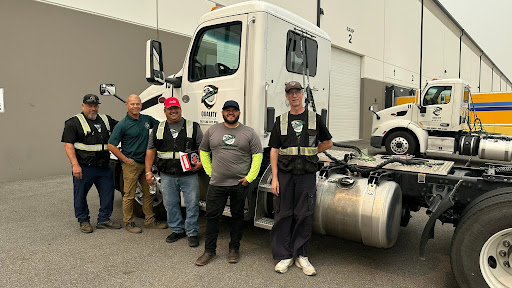
Selecting a shipping mode is only half the battle; the partner you choose to manage that freight is just as critical. The right 3PL provider acts as an extension of your team, taking ownership of your logistics challenges. At Quality Distribution, our core values guide us to put people first and take ownership of every situation, ensuring we meet your needs or help you find the best solution in the marketplace.
Our complete onboarding process, The Quality Way, ensures a smooth transition. From the initial discovery meeting to matching you with a dedicated Customer Success Manager and the right warehouse in our 1.6 million square feet of space, we tailor our approach to your business from day one.
Expertise in LTL Shipping and Full Truckload Solutions
With over 30 years of logistics expertise, we have deep, practical knowledge in managing both LTL and FTL freight. We operate our own asset-based fleet for final-mile delivery throughout the Salt Lake Valley and along the Wasatch Front, giving us direct control over service quality. Customers who deliver to our warehouses consistently praise our professional team and fast unloading times, reflecting our commitment to efficiency.
Our services go beyond simple transportation. We offer integrated solutions, such as cross-docking and transloading services, to expedite product transfers and support efficient distribution from our five Salt Lake City facilities. Our transloading team helps products move safely between transportation modes with careful handling, quick turnaround times, and flexible solutions that can reduce delays and control costs. This complete capability allows us to build the most efficient and cost-effective shipping strategy for your specific products and market demands
Technology and Transparency in Your Freight Operations
In modern logistics, information is as important as the physical movement of goods. We believe in total transparency, which is why we provide clients with a customer portal offering real-time visibility into their inventory and shipment status. This advanced WMS and TMS technology equips you with the data you need to make proactive decisions and manage your supply chain effectively.
This commitment to transparency aligns with our core value of taking ownership. We provide the tools you need to feel in control of your inventory, whether it’s in our warehouse or in transit. When you partner with Quality Distribution, you gain a reliable operator dedicated to improving your logistics with proven processes and powerful technology. Let’s build a more efficient supply chain together.
Making an Informed Freight Decision for Efficiency and Savings
Ultimately, the LTL vs. FTL decision is a strategic choice that should align with your business goals. It’s not just about finding the cheapest rate for a single shipment; it’s about building a resilient and cost-effective supply chain that supports your growth. An informed decision considers cost, speed, security, and the nature of your products.
For businesses with varied shipping needs, the answer may not be to choose one method exclusively. A hybrid approach, using LTL for smaller, routine orders and FTL for large-scale replenishments or urgent deliveries, often yields the best overall results. The key is to work with a logistics partner who has the expertise and flexibility to offer all these options and guide you toward the right one for each scenario.
By analyzing your freight profile and understanding the tradeoffs, you can avoid unnecessary expenses and improve service levels. This proactive approach transforms shipping from a cost center into a competitive advantage. Ready to improve your freight strategy? Our team can provide a complimentary analysis of your shipping patterns to identify immediate opportunities for savings and efficiency gains.
Frequently Asked Questions
What is the main difference between FTL and LTL?
The main difference is exclusivity. With Full Truckload (FTL), your shipment is the only one on the truck, resulting in a direct, faster, and more secure transit. With Less-Than-Truckload (LTL), your shipment shares truck space with others, which is more cost-effective for smaller loads but results in longer transit times and more handling.
How is LTL shipping cost calculated?
LTL shipping costs are complex and depend on several factors. The main ones are weight, distance, and freight class (which itself is based on density, stowability, handling, and liability). Additional costs, called accessorials, can be added for services like liftgate delivery, residential pickup, or handling non-standard freight.
What is the biggest disadvantage of LTL shipping?
The biggest disadvantage of LTL is the increased risk of damage and longer, less predictable transit times. Because shipments are loaded and unloaded multiple times at various terminals, the potential for handling errors or damage is higher than with FTL. These multiple stops also add significant time to the delivery schedule.
How does operating in the Intermountain West affect my shipping choice?
The geography and climate of the Intermountain West can influence your decision. Mountain passes and winter weather along corridors like I-80 can cause delays, making FTL's more predictable transit times advantageous for urgent shipments. As a major logistics hub, Salt Lake City has great carrier capacity, but working with a local expert like Quality Distribution, who understands regional conditions, ensures more reliable service year-round.
Partner with an Expert for a Smarter Freight Strategy
Stop guessing and start improving. Navigating the complexities of freight shipping requires more than just picking a carrier; it requires a strategic partner. With over 30 years of experience and a complete suite of services, Quality Distribution acts as an extension of your team, designing tailored solutions that maximize cost savings and streamline your supply chain.
Whether you need the affordability of LTL or the speed of FTL, we provide the expertise and infrastructure to support your growth. Our asset-based fleet, advanced technology, and commitment to taking ownership of every situation ensure your goods are handled with precision and care.
Let us help you make the right freight decision every time. Contact the Quality Distribution team for a complimentary, no-obligation analysis of your shipping needs and discover how a true logistics partnership can transform your business.
Related Reads

- What Is Cross-Docking & How It Saves Your Business Money - July 2, 2026
- Why Regional Distribution Matters in Modern Supply Chains - June 22, 2026
- LTL vs. FTL: Choosing the Right Freight Option for Your Business - June 11, 2026